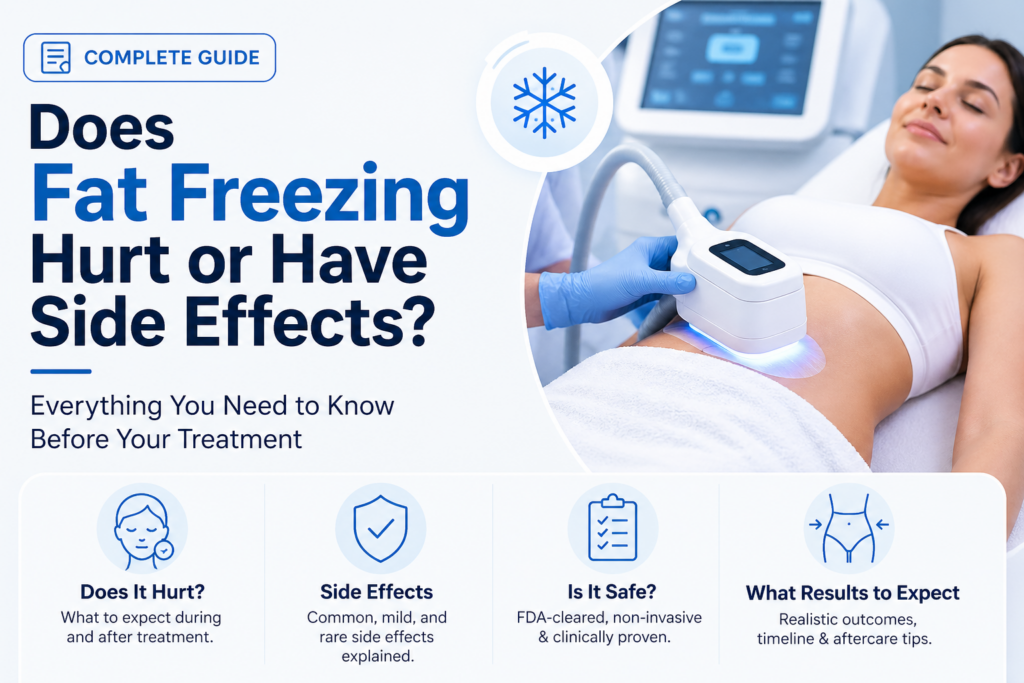
Non-invasive body contouring treatments are becoming increasingly popular, and fat freezing (cryolipolysis) is one of the most sought-after options.
But one common question people ask is:
👉 Does fat freezing hurt or have side effects?
In this guide, we’ll break down the pain level, possible side effects, and overall safety so you can decide if it’s right for you.
What Is Fat Freezing?
Fat freezing, also known as cryolipolysis, is a non-surgical treatment that uses controlled cold temperatures to target and destroy fat cells.
How It Works:
- Fat cells are exposed to cold temperatures
- The cells freeze and break down
- Your body naturally eliminates them over time
Popular systems like CoolSculpting use this method to reduce stubborn fat in areas like:
- Abdomen
- Thighs
- Arms
- Love handles
Does Fat Freezing Hurt?
Quick Answer:
👉 No, fat freezing is not considered painful—but it can feel uncomfortable.
What You May Feel During Treatment:
- Intense cold sensation (first 5–10 minutes)
- Pulling or tugging feeling from the applicator
- Tingling or mild numbness
After a few minutes, the area typically becomes numb, making the rest of the session more comfortable.
What Happens After Treatment?
Once the session ends, the treated area is usually massaged to break up frozen fat cells.
You may experience:
- Mild discomfort
- Temporary sensitivity
- Slight soreness
These effects are normal and short-lived.
Common Side Effects of Fat Freezing
Fat freezing is generally safe, but like any cosmetic procedure, it may have some side effects.
Normal Side Effects:
- Redness
- Swelling
- Bruising
- Numbness
- Tingling sensation
These usually go away within a few days to weeks.
Rare Side Effects
Although uncommon, some people may experience:
1. Paradoxical Adipose Hyperplasia (PAH)
- Fat tissue increases instead of decreasing
- Rare but may require corrective treatment
2. Prolonged Numbness
- Can last several weeks in rare cases
3. Skin Sensitivity
- Temporary tenderness or firmness
Is Fat Freezing Safe?
👉 Yes, fat freezing is FDA-approved and considered safe when performed by trained professionals.
Safety Tips:
- Choose a certified clinic
- Follow pre- and post-treatment instructions
- Avoid overexposure to cold treatments
Who Should Avoid Fat Freezing?
Fat freezing may not be suitable if you have:
- Cold sensitivity conditions
- Cryoglobulinemia
- Severe circulatory disorders
Always consult a professional before treatment.
Pain vs Results: Is It Worth It?
Pros:
- Non-invasive (no surgery)
- Minimal downtime
- Long-lasting fat reduction
Cons:
- Mild discomfort
- Results take time (weeks to months)
- Multiple sessions may be needed
How to Reduce Discomfort
You can make the experience more comfortable by:
- Wearing loose clothing
- Staying hydrated
- Relaxing during treatment (many people read or use their phone)
Conclusion
So, does fat freezing hurt or have side effects?
👉 It’s not painful, but you may feel temporary discomfort.
👉 Side effects are usually mild and short-term.
Overall, fat freezing is a safe and effective option for reducing stubborn fat—especially if you want a non-surgical solution.
FAQs
Does fat freezing hurt more than cryotherapy?
Fat freezing is more localized and may feel slightly uncomfortable, while cryotherapy is shorter and affects the whole body.
How long do side effects last?
Most side effects disappear within a few days to a few weeks.
Is fat freezing permanent?
Yes, destroyed fat cells are permanently removed, but maintaining results requires a healthy lifestyle.
Can I return to work after treatment?
Yes, there is little to no downtime.