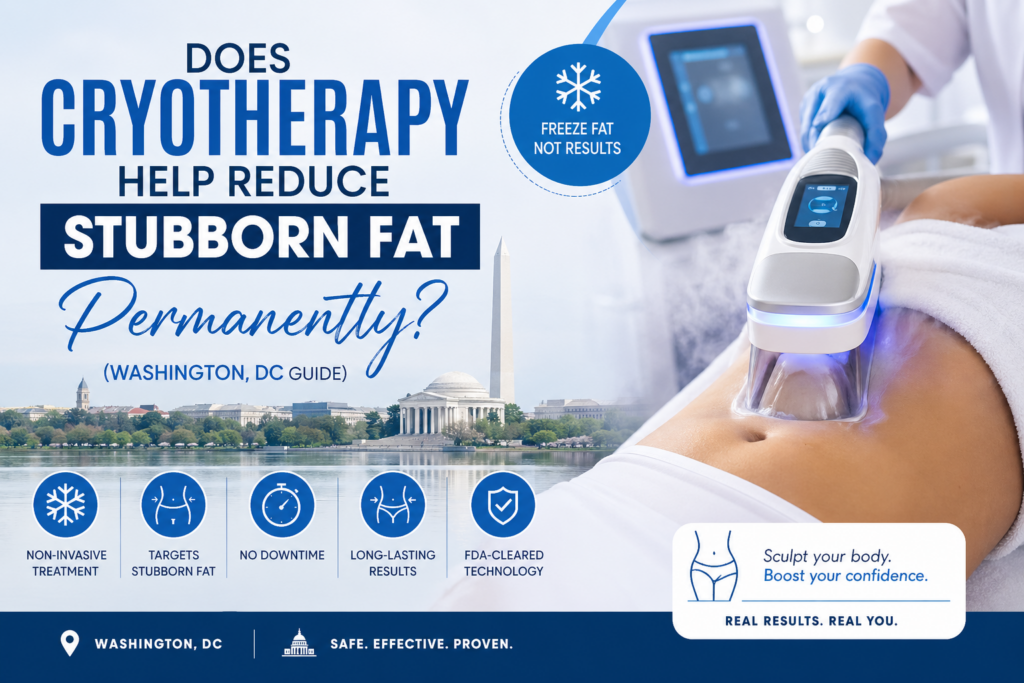
If you’ve been struggling with stubborn fat that won’t go away despite diet and exercise, you’re not alone. Many people in Washington, DC are now turning to cryotherapy and fat freezing treatments as a non-invasive solution.
But the big question is:
Does cryotherapy permanently reduce stubborn fat?
Let’s break it down with clear, science-backed answers.
Quick Answer: Is Fat Reduction Permanent?
Yes — cryotherapy can permanently reduce fat cells in treated areas.
However, there’s a catch:
- The treated fat cells are destroyed and do not come back
- But remaining fat cells can still expand if you gain weight
👉 This means results are long-lasting, but maintaining them depends on your lifestyle.
How Cryotherapy for Fat Loss Works
Cryotherapy for fat reduction is often referred to as fat freezing (cryolipolysis).
Here’s how it works:
- Controlled cold temperatures target fat cells under the skin
- Fat cells freeze and break down
- Your body naturally eliminates them over time
Unlike diet and exercise, which shrink fat cells, this treatment actually removes them from the body.
Areas Where Cryotherapy Works Best
Cryotherapy is especially effective for stubborn fat in:
- Abdomen (belly fat)
- Love handles (flanks)
- Thighs
- Double chin
- Back fat
These are the areas where fat tends to resist traditional weight loss methods.
How Many Sessions Are Needed?
Most clients need:
- 1 to 3 sessions per area
- Each session spaced a few weeks apart
The number of sessions depends on:
- Fat thickness
- Body goals
- Treatment area
When Will You See Results?
Cryotherapy results are not instant.
Typical timeline:
- 2–3 weeks: Early changes begin
- 4–6 weeks: Noticeable fat reduction
- 8–12 weeks: Full results visible
Your body needs time to naturally process and remove the destroyed fat cells.
Is Cryotherapy Better Than Weight Loss?
Not exactly — they serve different purposes.
| Cryotherapy | Weight Loss |
|---|---|
| Targets specific fat areas | Reduces overall body fat |
| Permanently removes fat cells | Shrinks fat cells |
| Body contouring treatment | Full-body transformation |
👉 Best results come from combining both.
Benefits of Cryotherapy for Fat Reduction
- Non-invasive (no surgery)
- No downtime
- Targets stubborn fat precisely
- Long-lasting results
- Safe and FDA-cleared technologies
Who Is the Ideal Candidate?
Cryotherapy is best for people who:
- Are close to their ideal weight
- Have localized fat pockets
- Want body contouring without surgery
It is not a weight-loss solution for obesity.
Are There Any Side Effects?
Cryotherapy is generally safe, but mild side effects may include:
- Temporary redness
- Swelling
- Numbness
- Mild discomfort
These usually resolve within a few days.
Cryotherapy in Washington, DC: What to Expect
If you’re considering cryotherapy in the Georgetown or Washington, DC area, expect:
- Personalized consultation
- Targeted fat analysis
- Customized treatment plan
- Professional-grade equipment
Choosing an experienced provider ensures better results and safety.
Final Verdict: Is Cryotherapy Worth It?
Yes — cryotherapy can permanently reduce stubborn fat, making it an excellent option for body contouring.
But remember:
- It’s not a shortcut to weight loss
- Results depend on your lifestyle
- Maintenance is key for long-term success
Call to Action
Ready to eliminate stubborn fat without surgery?
👉 Book your cryotherapy fat reduction session in Washington, DC today and start seeing real, lasting results.
FAQ
Does cryotherapy permanently remove fat?
Yes, treated fat cells are destroyed and eliminated from the body permanently.
Can fat return after cryotherapy?
Not in the treated area — but remaining fat cells can grow if you gain weight.
How much fat can be reduced?
Typically 20–25% fat reduction per session in the treated area.
Is cryotherapy painful?
No, most people experience only mild cold sensation and temporary numbness.