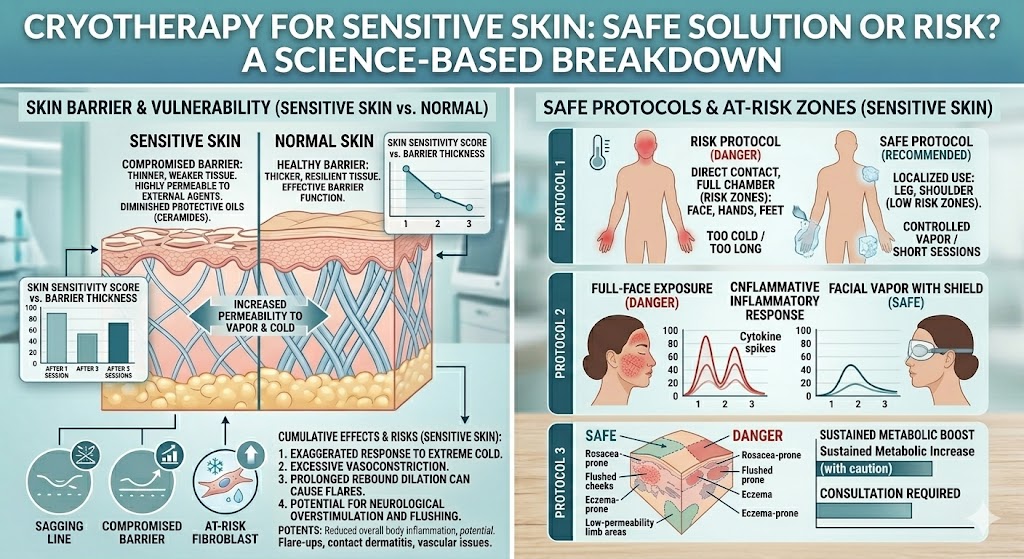
Sensitive skin requires extra care, especially when trying new treatments. With the growing popularity of cryotherapy in skincare, many people are asking: Is cryotherapy for sensitive skin a safe solution or a potential risk?
Cryotherapy uses controlled cold temperatures to reduce inflammation, soothe irritation, and rejuvenate the skin. While it offers many benefits, sensitive skin types need to approach it carefully. This article provides a science-backed look at how cryotherapy affects sensitive skin, including its benefits, risks, and best practices.
What Is Cryotherapy?
Cryotherapy is a non-invasive treatment that exposes the body or specific areas to extremely cold temperatures.
There are two main types:
- Whole-body cryotherapy (extreme cold exposure for overall recovery)
- Localized cryotherapy (targeted treatment, often used on the face)
For sensitive skin, localized cryotherapy is more commonly recommended due to its controlled and targeted approach.
What Is Sensitive Skin?
Sensitive skin is more reactive than normal skin and may respond to environmental triggers, skincare products, or temperature changes.
Common symptoms include:
- Redness
- Burning or stinging
- Dryness
- Itching
People with conditions like rosacea or eczema often fall into this category.
How Cryotherapy Affects Sensitive Skin
Cryotherapy can have both positive and negative effects depending on how it’s used.
1. Reduces Inflammation
Cold temperatures help calm irritated skin by reducing inflammatory responses.
Benefit:
- Soothes redness and swelling
- Provides relief from flare-ups
2. Strengthens Skin Barrier
Controlled cold exposure may help improve skin resilience over time.
Result:
- Better protection against environmental irritants
- Improved moisture retention
3. Provides Instant Soothing Effect
Cryotherapy can numb nerve endings, reducing discomfort.
What you feel:
- Cooling relief
- Reduced itching or burning sensation
Potential Risks of Cryotherapy for Sensitive Skin
While beneficial, cryotherapy isn’t risk-free—especially for delicate skin types.
1. Cold-Induced Irritation
Excessive cold exposure can trigger irritation instead of calming the skin.
Possible effects:
- Increased redness
- Skin sensitivity flare-ups
2. Risk of Overexposure
Long or improperly administered sessions can damage the skin barrier.
3. Not Suitable for All Conditions
People with extreme cold sensitivity or certain skin disorders should avoid cryotherapy unless advised by a professional.
Is Cryotherapy Safe for Sensitive Skin?
Yes—but only when done correctly and cautiously.
Safety depends on:
- Professional supervision
- Controlled exposure time
- Proper temperature settings
- Individual skin condition
Best Practices for Sensitive Skin
To safely use cryotherapy:
- Start with shorter sessions
- Choose localized treatments over whole-body sessions
- Consult a skincare professional beforehand
- Monitor your skin’s reaction after each session
- Avoid combining with harsh skincare products
Who Should Avoid Cryotherapy?
Cryotherapy may not be suitable for individuals with:
- Severe cold intolerance
- Certain circulatory disorders
- Open wounds or infections
- Extremely reactive skin conditions
Always seek medical advice if unsure.
At-Home Alternatives for Sensitive Skin
If professional cryotherapy feels too intense, try gentler options:
- Ice rollers
- Cold compresses
- Chilled skincare tools
These methods provide mild soothing effects with lower risk.
Growing Demand for Gentle Skincare Solutions
Globally, there is increasing demand for non-invasive and sensitive-skin-friendly treatments. Cryotherapy clinics are adapting by offering:
- Customized treatments for delicate skin
- Lower-intensity facial cryotherapy
- Personalized skincare plans
This reflects a broader shift toward safer, tailored skincare solutions.
Conclusion
So, is cryotherapy for sensitive skin a safe solution or a risk?
The answer is: it can be both. When performed correctly, cryotherapy can soothe inflammation, reduce redness, and improve skin health. However, improper use or overexposure can lead to irritation.
For those with sensitive skin, the key is moderation, professional guidance, and careful monitoring. With the right approach, cryotherapy can be a safe and effective addition to your skincare routine.
FAQs
Can sensitive skin tolerate cryotherapy?
Yes, but it should be done carefully with controlled exposure and professional guidance.
Does cryotherapy reduce redness?
Yes, it can reduce redness by calming inflammation.
Is facial cryotherapy safe for rosacea?
It may help, but individuals should consult a dermatologist first.
How often should sensitive skin use cryotherapy?
Start with once a week and adjust based on your skin’s response.